Skip to content

Home Education
Introduction to Great Salt Lake Education Programs PDF Print E-mail

mirage2.jpg

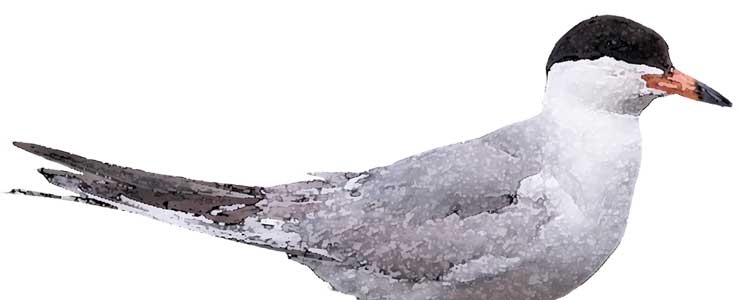
Great Salt Lake supports a rich and dynamic biological system of regional, national and global importance. The amazing abundance of bird life at Great Salt Lake has earned its designation as a "Western Hemisphere Shorebird Reserve." Birds of regional, national and international significance are drawn to its 15,000 square miles of various water environments, remote islands and shorelines, and about 400,000 acres of wetlands. Every year five million birds from 257 different species rely on the lake to feast during their thousand mile or more migrations. While there, they enjoy a unique and safe sanctuary that supports numerous breeding populations. The ecology of life at Great Salt Lake is an extraordinary example of the rich web of relationships between land and water, food and survival.

Great Salt Lake is a terminal lake with no outlet. Over time lake levels and salinity change dramatically depending on the level and quality of freshwater inputs from the Bear, Weber and Jordan River systems in tandem with seasonal evaporation rates. The geography of the lake combined with man-made causeways, create a diversity of lake environments varying from the extremely salty North arm (almost 28%), to the nearly freshwater Farmington Bay. Such diverse water environments are connected to expansive playas, shorelines and uplands to create excellent habitats for innumerable plants, invertebrates, reptiles, amphibians, mammals and birds.

Our Programs

(All our programs need VOLUNTEERS. Click here to download a volunteer application and JOIN OUR TEAM!)

Lakeside Learning. Our lakeside learning field trips are designed to complement the 4th grade science core curriculum mandated by the state of Utah. Every spring and fall we take hundreds of 4th grade students out to Antelope Island State Park for a fun day of science and education. Great Salt Lake is the perfect outdoor "classroom" that provides the opportunity for relevant place-based educational experiences in biology, chemistry, geography, geology and weather, as well as in history, language arts and career motivation. Pre and post field trip activities are available for download.

Project SLICE 4th Grade CurriculumOur Salt Lake Initiative for Conservation Education - or Project SLICE, is designed to assist teachers with matching the wealth of scientific, cultural and economic attributes of Great Salt Lake to their own standards-based instructional needs. The entire curriculum is free and available for download after registration. For teachers interested in teaching with these materials, we also offer a Teacher Training Institute and a SpeakersNetwork.

The Lake Affect Slide and Video Presentations. Record human populations in northern Utah are encroaching upon the lake, while public attitudes about the Lake remain indifferent. To provide for a citizenry that better understands the fragile Great Salt Lake Ecosystem and their relationship to it we offer a "virtual field trip" that consists of a slideshow or video presentation.

Coming Soon! LakeSide Investigations. We have a dedicated team of volunteer educators developing a complex, hypothesis-driven field trip for 7th, 8th, and 9th grade students at Antelope Island State Park. Students will gain experience in data collection and analysis using scientific instruments to test and compare water quality between less salty Farmington Bay with the main body of Great Salt Lake. It will be a unique opportunity for them to get hands on experience while fulfilling state science core requirements.

Our Funding

Funding for our Great Salt Lake Education efforts has been generously provided by:

  • Dr. Ezekiel S. and Edna Wattis Dumke Foundation
  • JEPS Foundation
  • George S. and Dolores Doré Eccles Foundation
  • Patagonia Outlet
  • Utah Wetlands Foundation
  • Wilburforce Foundation
  • Hemingway Foundation
Additional support has come from our contributing members, teachers, Antelope Island State Park, Fox 13 Television, The Nature Conservancy of Utah, Utah Society for Environmental Education, Utah Museum of Natural History, University of Utah and Westminster College.
 
donate.gif

Connect with Us

facebooktwitter

Join Our E-news

Join our list to keep up to date on the latest news about the Great Salt Lake!


gslmap-sm.jpg

Latest Newsletter

Download Now (pdf)
winter2010_thumb

Terry Tempest Williams
We live along the Great Salt Lake, one of the most extraordinary natural features in North America. I do not believe we, as a community, have honored its rarity. Our lack of intimacy toward this inland sea is not out of neglect, but of ignorance. We do not know the nature of this vast body of water that sparkles and sings. If we did, the shores of the Great Salt Lake would look different. Terry Tempest Williams, FRIENDS of Great Salt Lake Advisory Board

Membership Survey

We Want Your Feedback!

Click here to take our FOGSL survey.


Contact Us
Top