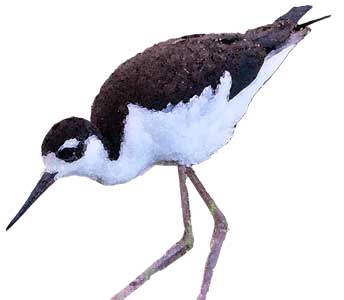
FRIENDS of Great Salt Lake established the Doyle W. Stephens Research Program to celebrate Stephens' remarkable scientific contributions toward understanding the Great Salt Lake Ecosystem. The Doyle W. Stephens Scholarship provides support to undergraduate and graduate students engaged in new or on-going research that focuses on Great Salt Lake and its ecosystem. 2026 winners will be announced at the Great Salt Lake Issues Forum. 2027 applications will open January 2.
Scholarship Eligibility
Applicants must be undergraduate or graduate students currently enrolled at an accredited college or university. Individuals who have previously received this award are not eligible. The award may be used to support laboratory or field research, attendance at professional meetings, or other activities that further the understanding or protection of the Great Salt Lake ecosystem. Research located anywhere in the Great Salt Lake watershed can qualify for this award. We will consider projects from any academic field (for instance: ecology, biology, chemistry, physics, geography, geology, urban planning, social sciences, communications, education, economics, tourism, engineering, etc.). Please include a short research proposal (1-5 pages) along with a proposed budget.
Click here for a sample rubric.
Featured Research by Scholarship Recipients
In 2016, Derek Mallia was awarded the Doyle W. Stephens Scholarship as a University of Utah doctoral student for his project, "The Impacts of a Shrinking Great Salt Lake on Future Air Quality." Now a professor in the University of Utah's Department of Atmospheric Sciences, Derek continues to build on that research.
In partnership with Kevin Perry, Wilkes Center for Climate Science & Policy, and Utah Department of Natural Resources, Derek developed a new, interactive data visualization tool modeling how the amount of dust transported to the surrounding communities is tied to the elevation of Great Salt Lake. This tool was released in January 2026, and will continue to be updated with additional data.
Explore the Great Salt Lake Basin Dust Exposure Modeling Tool here.
History of Dr. Doyle W. Stephens and the scholarship created in his name.
Doyle Stephens was born in Ogden, Utah, in 1944. He received his BS in Biology from Weber State College in 1967, his MS in Entomology in 1969 and his PhD in Limnology from the University of Utah in 1974.
At the time of his death in May, 2000, he had been a research hydrologist for the U.S. Geological Survey for nearly 20 years. In 2001, he was posthumously awarded the Governor's Medal for Science and Technology.
Doyle Stephens made significant contributions toward public awareness of critical issues relating to Utah's natural resources and environment. Of particular importance were his efforts to increase public knowledge and awareness of the Great Salt Lake Ecosystem. As a contributor to the state's Great Salt Lake Ecosystem project, Doyle's work on Great Salt Lake shrimp ecology helped increase understanding about population dynamics of the shrimp in the lake and factors affecting the structure and density of the population.
"Stephens leaves a broad and deep body of scientific work. His legacy is that his work's contribution to the environment, to the economy, and to the quality of life in Utah will not diminish over time but will continue to grow," says Don Leonard, Former President, Utah Artemia Association.
Another colleague observed: "Icebergs don't happen in Great Salt Lake, save one. Before he left us so prematurely, we only got to see the tip of Doyle Stephens' impact on the work of almost every other Great Salt Lake investigator. As time passes, we will begin to understand the extent of Doyle's work and the encouragement he lent to others to wonder and search along with him."
Doyle W. Stephens Scholarship Recipients
- 2003 - Henry Hyochang Lee, Ph.D. student, University of Utah "The economics of the brine shrimp resource in Great Salt Lake"
- 2004 - Ashlee Allred, Undergraduate, Westminster College "Phytoprotective pigment production by Great Salt Lake microbes"
- 2005 - Carla Koons Trentelman, Ph.D. student, Utah State University "Place attachment among neighbors of Great Salt Lake and its environs"
- 2006 & 2007 - Misty Riddle, Undergraduate, Westminster College "Microbial Influence in the Great Salt Lake: Identification of Great Salt Lake Microbes Associated with the Brine Shrimp, Artemia Franciscana" - Recipient Video
- 2008 - Christy Cottrell, Undergraduate Weber State College "Metagenomic diversification of Great Salt Lake Brine Flies"
- 2009 - Gregory T. Carling, Ph.D. student, University of Utah "Mercury Cycling in Wetlands Adjacent to the Great Salt Lake" - Recipient Video
- 2010 - Richard Beau Anderson, M.Sc. student, Univerisity of Utah "Recharge source, age, and projected flow path of submarine groundwater discharge to Great Salt Lake"
- 2011 - Anthony J. Roberts, Ph.D. student, Utah State University "Origin of Waterfowl Wintering on Great Salt Lake: A Stable Isotope Approach"
- 2012 - Rebekah Downard, Ph.D. student, Utah State University "Determining the Impact of Impoundment and Water Management on Wetland Condition around the Great Salt Lake, Utah"
- 2013 - Joel Pierson, M.Sc. student, University of Utah "Nutrient Cycling in Willard Spur, Great Salt Lake, Utah" - Recipient video
- 2014 - Christine Rohal, M.Sc. student, Utah State University "Effective methods for control of the widespread invasive grass, Phragmites australis: A large-scale, multi-year experiment to improve restoration of native wetland plant communities in Great Salt Lake wetlands"
- 2015 - Chris Mansfield, Undergraduate, Westminster College Is photo-degradation an important control on methylmercury in the Great Salt Lake?
- 2016 - Derek Mallia, Ph.D. student, University of Utah "The Impacts of a Shrinking Great Salt Lake on Future Air Quality"
- 2017 - Melody Lindsay, Ph.D. student, University of Montana "Effects of Changing Salinity on Microbialite-Associated Primary Producers and Secondary Consumers in Great Salt Lake" - You can read her full proposal here!
- 2018 – Katherine Barrett, Ph.D. student, University of Notre Dame "Linking Artemia To The Benthos: Do Microbialites Support Brine Shrimp Production in Great Salt Lake?" - Recipient Video
- 2019 Clint Carney, Ph.D. student, Utah State University "Bringing Great Salt Lake into Utah's Water Reallocation Conversation"
- 2019 Chloe Fender, B.A. student, Westminster College "Snowmelt Contaminant Pulses in the Wasatch Mountains"
- 2020 Melissa Cobo, Utah State University "Effects of Desiccation on Carbon Fluxes in Great Salt Lake"
- 2020 Molly Blakowski, Utah State University Department of Watershed Sciences "Historical trends in dust emissions from the shrinking Great Salt Lake and projections for human and environmental exposure risks."
- 2021 Meg Wolf, University of Utah "When in Drought: Improving Snowmelt Water Supply Predictions in a Changing Climate in Great Salt Lake Water Supply Catchments."
- 2021 Colin Robinson, Brigham Young University "Perchlorate-Reducing Microbes in the Desert of the Great Salt Lake Are the Key to Rearing Plants on Mars."
- 2022 Samuel Lopez, University of Utah "Mercury stable isotope fingerprinting to identify pollution sources in a local mercury-impaired ecosystem (Great Salt Lake, Utah, USA)"
- 2022 Paulina Martinez-Koury, Westminster College "Life will find a way: investigating entombed microorganisms in gypsum at Great Salt Lake as a model for studies of gypsum on Mars"
- 2023 Madison Brown, Brigham Young University "Assessing the Effects of Invasive Species Mitigation on Utah’s Wetland Microbial Systems"
- 2023 Nancy Sohlberg, University of Utah "A Climatology of Dust Events Impacting Snow Melt at the Atwater Study Plot in Alta, UT"
- 2024 Mei-Yu Chen, Brigham Young University "The potential unanticipated, lasting effects of glyphosate control of Phragmites australis ssp. australis in calcareous wetland ecosystems"
- 2024 Sam Carter, University of Utah "Using Environmental Tracers to Develop a Conceptual Framework of Groundwater Inflow into Farmington Bay, Great Salt Lake, UT"
- 2025 Georgia Morgan, University of Utah "Characterizing the Mechanisms that Great Salt Lake Microorganisms use to Adapt to Changing Metal Concentrations"
- 2025 Alexander Atkinson, Brigham Young University "Invasive Species and Water Loss: Automating the Study of Phragmites in Utah Wetlands"
- 2026 Lauren Whelton, University of Utah "Recovery dynamics of microbialite communities following environmental disturbance at Great Salt Lake"
- 2026 Kenton James Bustin, Weber State University "Life-raft or Ecological Trap? Evaluating Urban Subsidies for Juvenile California Gulls Amidst Great Salt Lake Ecosystem Collapse"
Please direct any questions to Holly Simonsen at